
SEO is a complex discipline. There are lots of variables to consider and it can be difficult to know whether you’re making the right decisions and whether your optimizations are having the desired effect on your website’s rankings and traffic.
The task of monitoring your SEO campaigns is made even more difficult when you have to check your metrics and KPIs across a variety of tools. Wouldn’t it be great to have all of your key SEO stats displayed in one easy-to-read dashboard?
Since 2008, I’ve worked on hundreds of sites. At any given time, my team and I are working on 20-30 websites. This means crunching a lot of data quickly daily. SEO dashboards really help simplify the process and not waste time going through all the tools.
I break down the top SEO dashboards and share my thoughts. Let’s get into it.
Best SEO Dashboards: Comparison Chart
We compare the best SEO dashboards, including their best use cases, standout features, limitations, and pricing.
| Dashboard | Best For… | Pros | Cons | Pricing |
|---|---|---|---|---|
| DashThis | Overall Performance | Add your own data sources via a CSV file | No white-labeled dashboards on the entry-level plan | From $38 per month |
| SE Ranking | Small Businesses | An affordable suite of SEO tools | Fewer advanced features compared to some leading SEO tools | From $44 per month |
| Looker Studio | Google Users | Free to use and integrated with other Google tools | Complex to set up and learn how to use | Free |
| Ahrefs | Serious SEOs | Comprehensive suite of SEO features | Expensive for individual SEOs | From $99 per month |
| Whatagraph | Marketing Teams | Live dashboards and scheduled PDFs | Expensive and not SEO-specific | From $245 per month |
| Databox | Variety of Dashboards | Choose from looped dashboards, embedded in HTML, displayed on TV, and more | Hourly updates only available on more expensive plans | From $47 per month |
| Serpstat | Content marketers | In-depth competitor analysis | Limited backlink and keyword data compared to Ahrefs and SEMRush | From $50 per month |
| SEMRush | Online Businesses & e-Commerce Sites | Comprehensive suite of SEO features | Expensive for individual SEOs | From $108 per month |
| Botify | Large companies | Advanced website crawling and technical SEO tools | Enterprise-level complexity may be too much for some users | Price upon request |
| Geckoboard | Managers and Team Leaders | Real-time data visualization | Some technical expertise is required to set up properly | From $39 per month |
Best Overall: DashThis
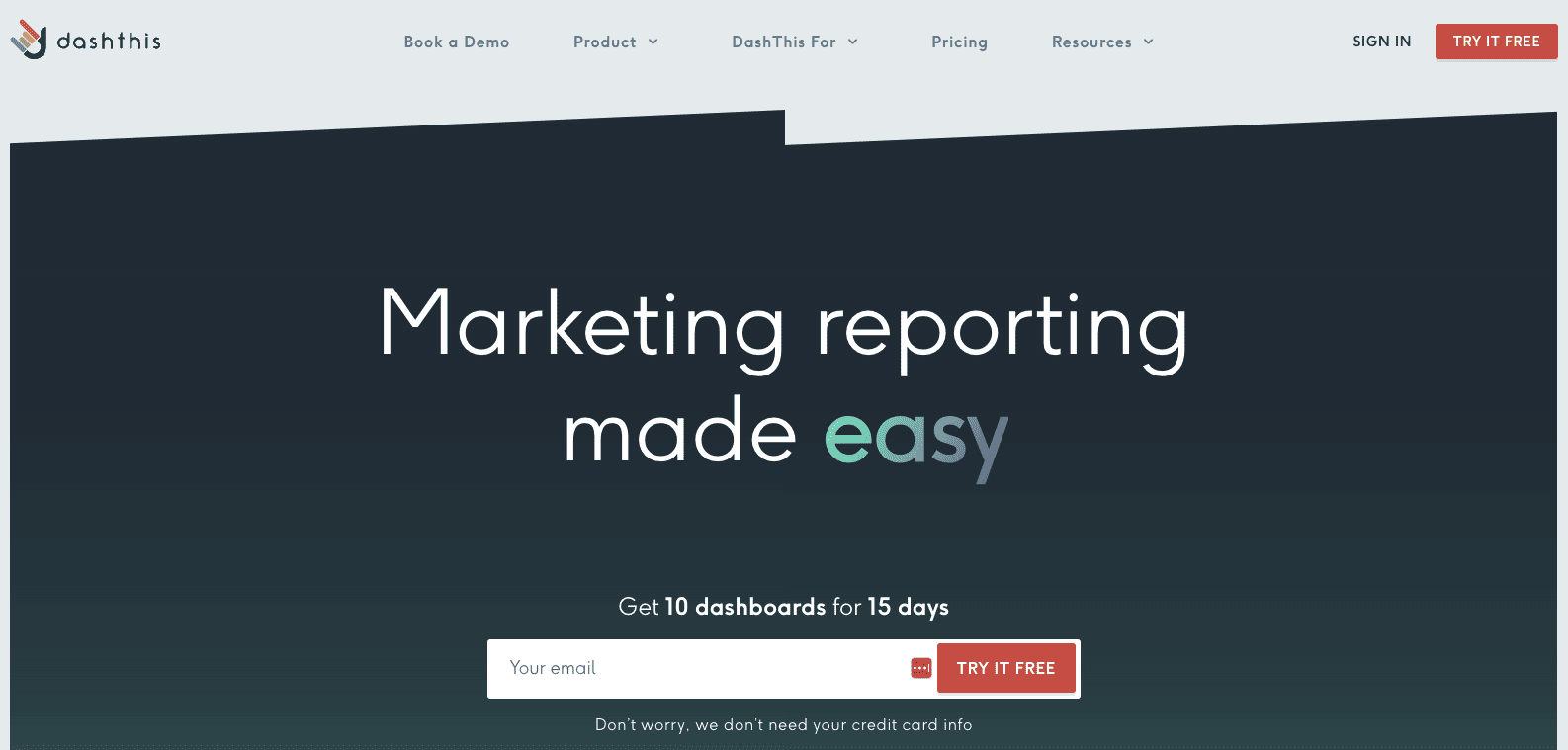
DashThis seamlessly combines data from platforms such as Google Analytics, Google Ads, Facebook, Ahrefs, Moz, YouTube, Instagram and more.
All your data can be displayed on beautifully clear dashboards, which automatically update themselves when fresh data is added. You can also upload your own data to be displayed on your dashboard alongside KPIs from other platforms.
Why Choose DashThis?
- Integration with other tools: DashThis connects to more than 34 of the most popular marketing tools.
- Import data via a CSV file: Adding your own data to your DashThis dashboard is easy.
- White labeling: Professional & Business Plan users can completely white label their dashboards.
Limitations
- No white-labeled dashboards on the entry-level plan
- Limited customization of pre-built templates
Pricing
- 15-day free trial
- Monthly subscriptions from $45 per month
- Annual subscriptions from $456 per year ($38 per month)
Best For Small Businesses: SE Ranking
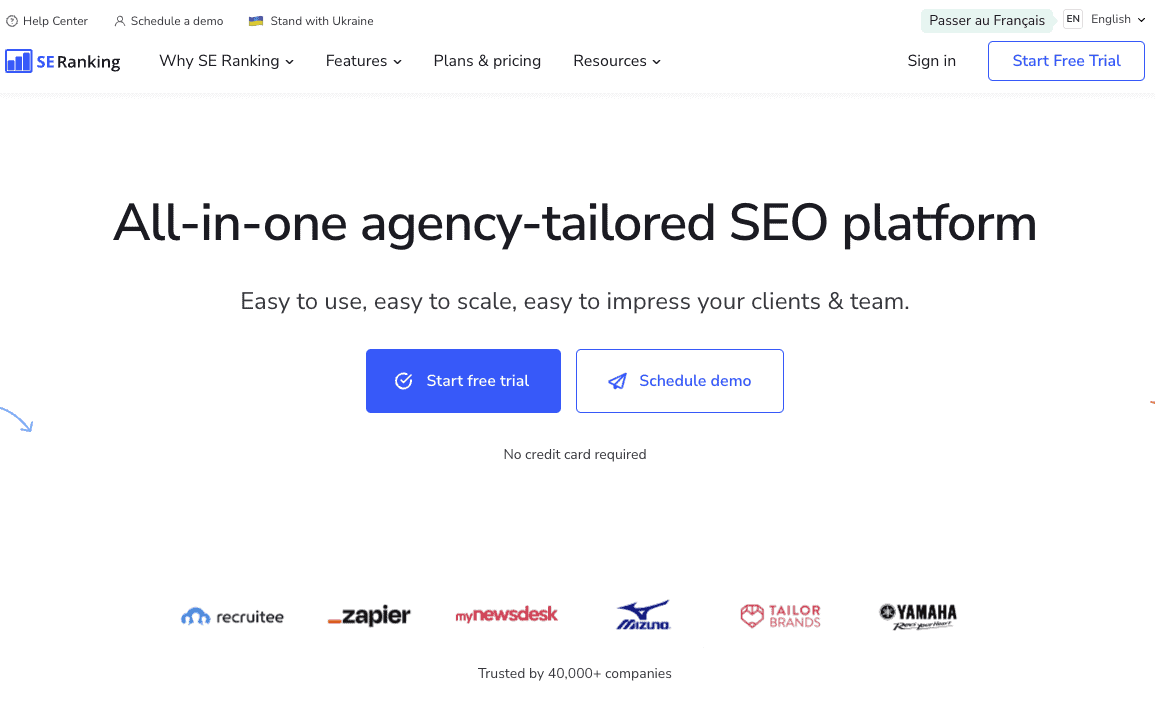
SE Ranking is an affordable SEO reporting tool that is perfect for individual SEOs, entrepreneurs, and small businesses.
SE Ranking includes features such as keyword rank tracking, competitor research, backlink monitoring, and website audits. The data from all of these tools is displayed clearly in charts and tables, which makes SE Ranking an excellent performance monitoring and SEO dashboard tool.
Why Choose SE Ranking?
- All-in-one platform: SE Ranking provides a suite of SEO tools to enhance your website’s performance.
- Affordable pricing: Starting from $44 per month, SE Ranking is a cost-effective solution for small businesses and individuals.
- User-friendly interface: Intuitive and easy-to-navigate dashboard that will clearly display your SEO KPIs.
Limitations
- Limited advanced features compared to higher-tier SEO tools such as Ahrefs or SEMRush.
- Restricted user access on lower-tier plans.
Pricing
- 14-day free trial
- Monthly subscriptions from $53 per month
- Annual subscriptions from $540 per year ($44 per month)
Best For Google Users: Looker Studio
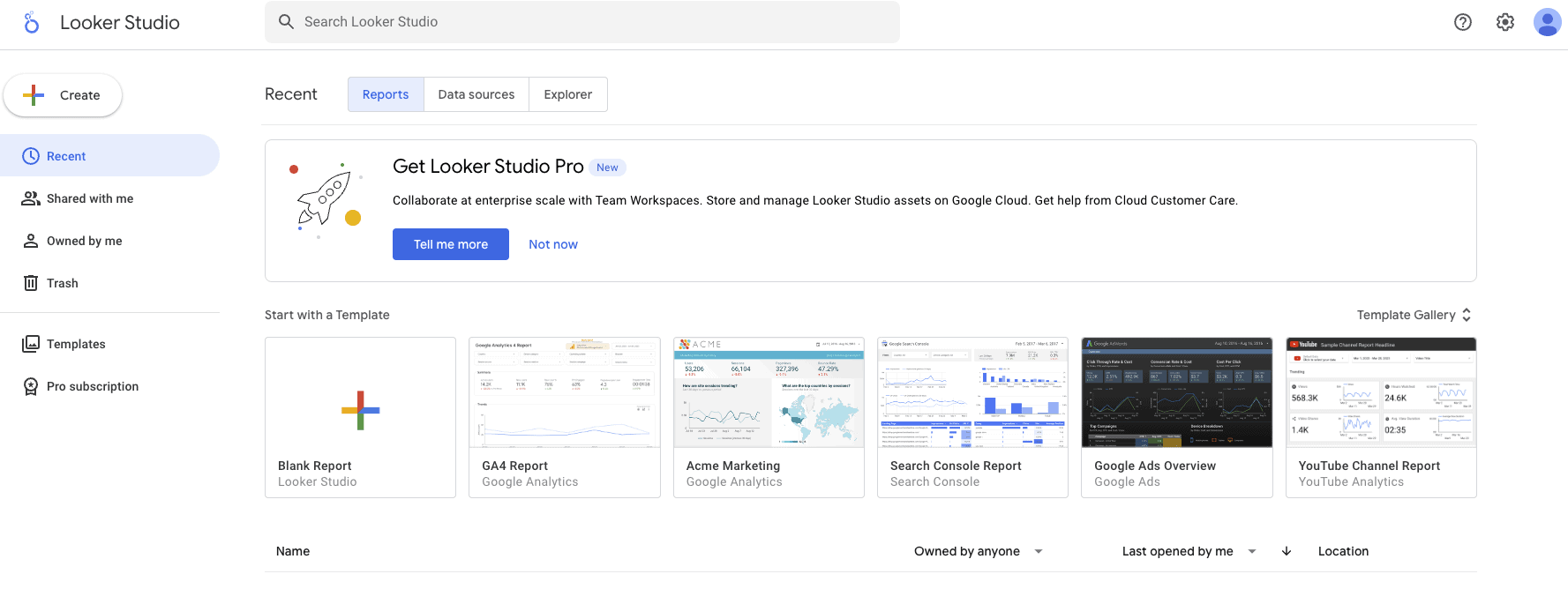
Previously known as Google Data Studio, Looker Studio allows Google users to take data from Google products, such as Google Analytics, Google Ads, and Google Sheets, and display them on fully customizable dashboards.
Unlike the other SEO dashboards and reporting tools on this list, Looker Studio is available to use completely free of charge, as long as you are using data from other Google tools. You’ll only need to pay if you wish to import third-party data from tools like SEMRush or Facebook Ads.
Why Choose Looker Studio?
- Free integration with Google products: Display all of your Google data on a dashboard free of charge.
- Option to import third-party data: Though it carries a cost, Looker Studio integrates well with other data sources.
- Data visualization: Looker Studio dashboards are easy to create, read and share.
Limitations
- Most SEOs will need to pay to integrate third-party data.
- Doesn’t blend data from different sources as well as other tools.
- Google customer support isn’t as responsive as other tools’ customer support teams.
Pricing
- Free when using Google data only
- Adding third-party data adds cost, depending on which data sources and how many data sources are added.
Best For Serious SEOs: Ahrefs
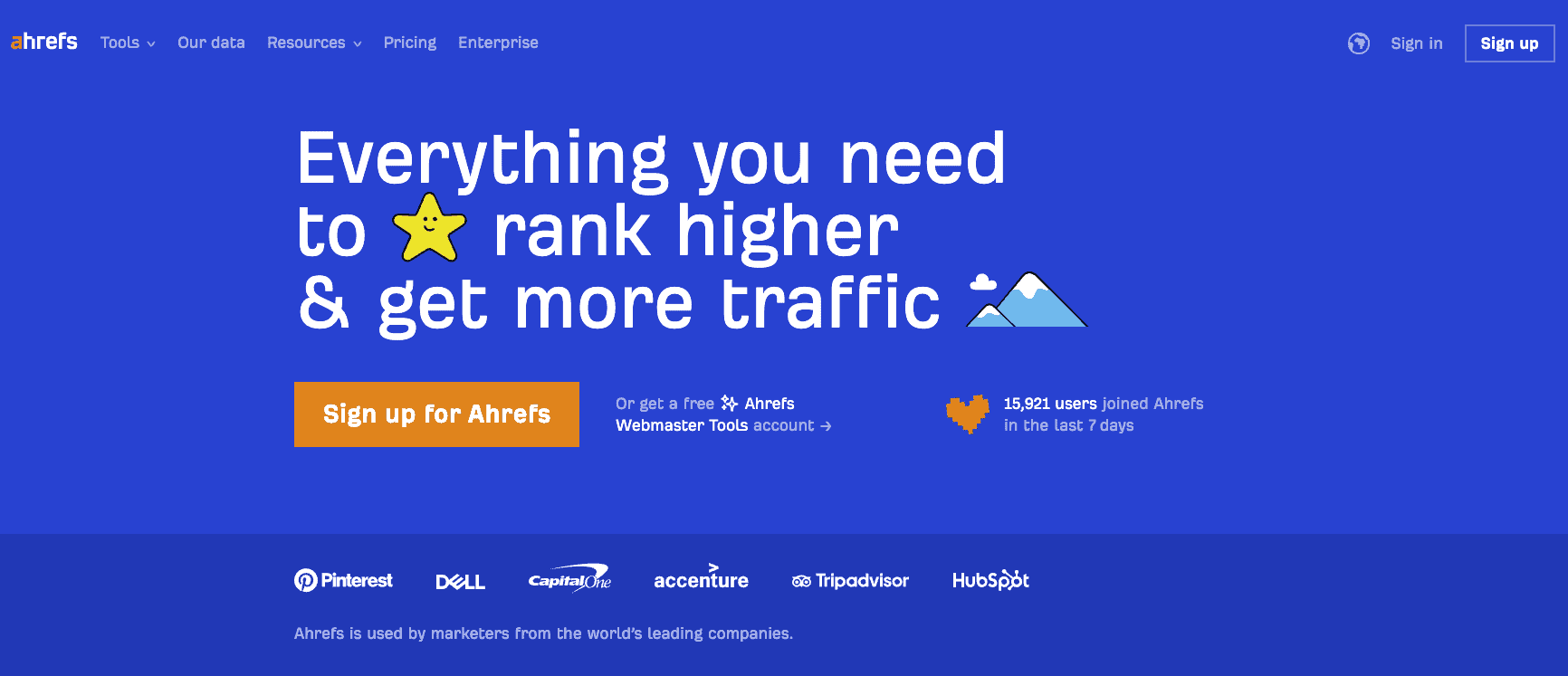
Ahrefs is one of the most comprehensive SEO tools available, providing a wide range of features for keyword research, backlink analysis, competitor analysis, and more. It’s particularly useful for tracking keyword rankings and monitoring backlinks.
Why Choose Ahrefs?
- Comprehensive suite of SEO tools: Like its competitor SEMRush, Ahrefs offers a huge range of SEO tools, advanced keyword tracking, and an extensive backlink database.
- User-friendly interface: The platform offers intuitive tools and visualizations to help users understand complex SEO data easily.
- Regular updates: Ahrefs continuously updates its database, ensuring users have access to the most recent and accurate SEO insights.
Limitations
- Ahrefs is an advanced tool and some users may find Ahrefs’ extensive features and data overwhelming.
- The high price may be an issue for some users, particularly if you want to access features that are only available on higher-level plans.
Pricing
- Plans from $99 per month
- Save 20% when you pay annually
Best For Marketing Teams: Whatagraph
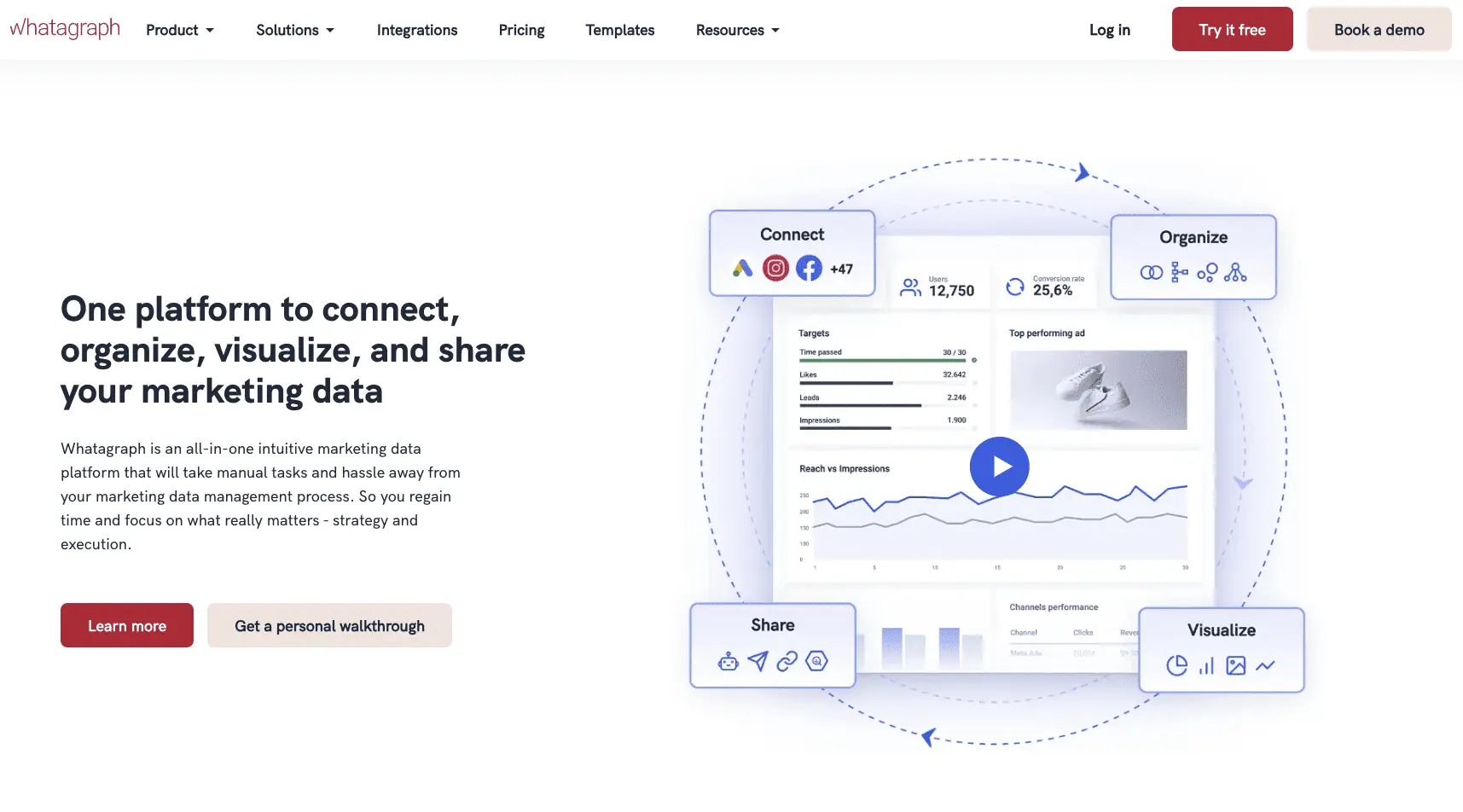
Whatagraph is an all-in-one marketing data platform designed to reduce manual tasks and simplify processes for marketing agencies and teams.
Whatagraph enables users to bring data from multiple channels, campaigns, and locations into a single dashboard, automatically highlighting metrics that meet targets. The tool offers easy customization, allowing users to organize and store reports in folders based on their specific needs.
Why Choose Whatagraph?
- Live dashboards: Display marketing KPIs from various sources in one place and update them in real-time.
- Automated reports: Especially useful for SEO agencies, automated reports allow you to send regular insights to clients without having to compile data manually.
- No-code data manipulation: Blend and aggregate data easily, with no need for coding.
Limitations
- While Whatagraph offers a user-friendly experience, and no-code features, some users may still find the initial learning curve challenging.
- The platform’s premium pricing structure may make Whatagraph unaffordable for some individuals or smaller businesses.
Pricing
- From $245 per month, billed annually ($2940 per year)
- 30-day money-back guarantee
Best For Dashboard Variety: Databox

Databox is a powerful data analytics platform that aims to streamline data analysis and reporting for businesses. It consolidates data from various sources into a single interface, providing users with valuable insights to make informed decisions.
Why Choose Databox?
- Dashboard variety: Whether you want to view your dashboard on a laptop, on a TV, on a mobile device via an app, by checking a scorecard, or by receiving email alerts, Databox can deliver your dashboard in a format to suit you.
- Benchmarking: Databox allows you to benchmark the performance of your business against similar companies.
- Pre-built templates and integrations: Databox connects with over 100 popular data sources and includes over 200 pre-designed templates.
Limitations
- Data only updates every four hours, except for on more expensive plans where hourly updates are available. 15-minute sync costs an extra $100 per month.
- Branding and white labeling costs an extra $250 per month.
Pricing
- The free plan allows you to create a dashboard that combines up to 3 data sources
- Paid plans start from $47 per month when paying annually (saving 20%)
Best For Content Marketers: Serpstat
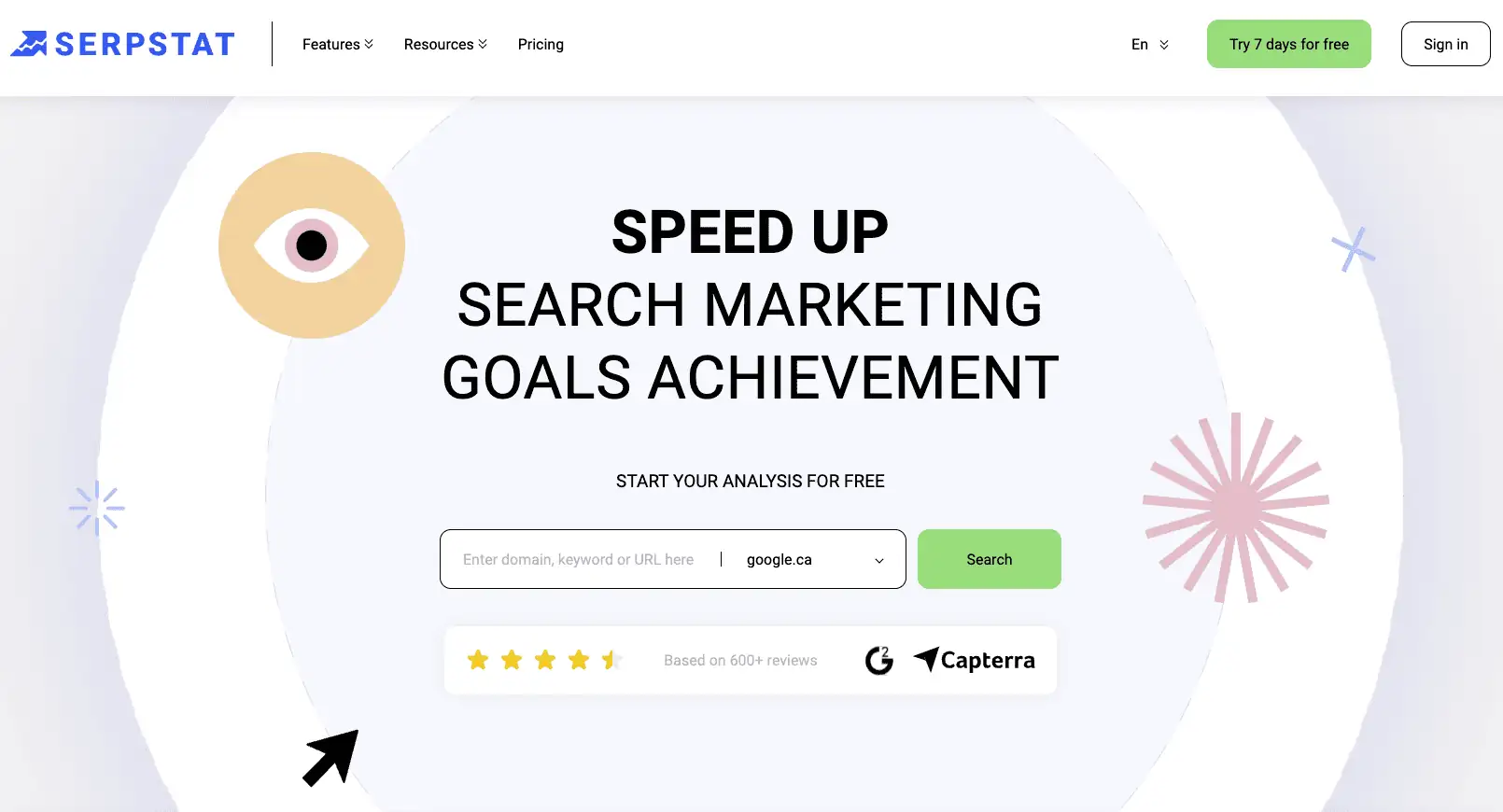
Serpstat is an all-in-one SEO platform that offers a suite of tools for in-depth competitor analysis, keyword research, backlink analysis, site audit, and more.
While not as comprehensive as some SEO tools – such as Ahrefs and SEMRush – Serpstat is available at a lower price point and offers all the tools that many SEOs and content marketers need.
Why Choose Serpstat?
- In-depth competitor analysis: Perfect for content marketers who want an SEO dashboard that can track their competitors’ rankings as well as their own site’s performance.
- All-in-one SEO platform: Serpstat is more than just a dashboarding and reporting suite, it includes a whole range of SEO tools.
- AI content generation: As an added bonus, some Serpstat plans also include access to an AI content generation tool.
Limitations
- Serpstat is primarily a suite of SEO tools, so while it can display key metrics on a dashboard, it’s not as customizable as dedicated reporting tools.
- The SEO tools offered by Serpstat are not as extensive as other tools on this list, such as Ahrefs and SEMRush.
Pricing
- Plans start from $50 per month paid annually ($600 per year)
- You can also choose to pay monthly, with plans starting at $59 per month
Best For Online Businesses: SEMRush
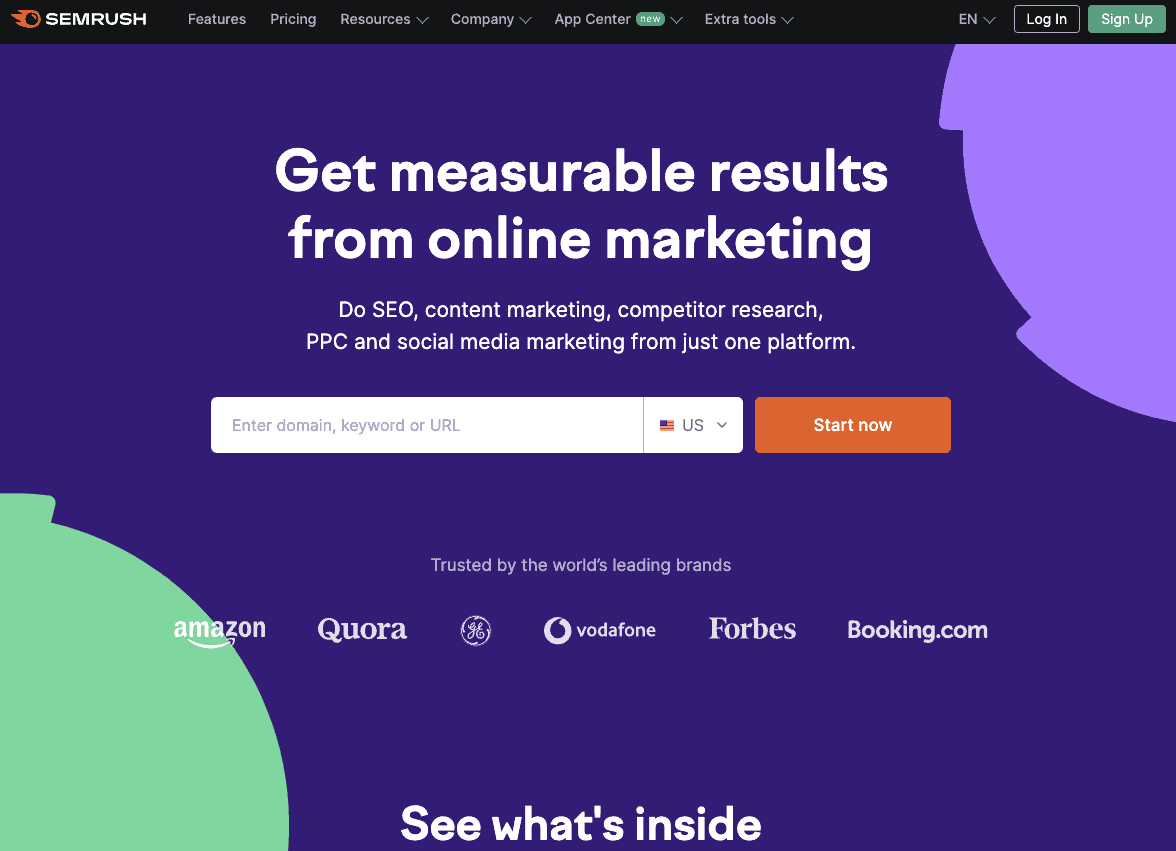
SEMRush is one of the leading marketing toolkits. It offers a comprehensive suite of tools for SEO, PPC, content marketing, market research, and competitive analysis.
This combination of tools, which include SEO and other aspects of online marketing, makes it the perfect choice for e-commerce sites and other types of online businesses.
Why Choose SEMRush?
- Comprehensive suite of marketing tools: SEMRush goes beyond SEO to offer all the marketing tools you need to monitor your business performance in one place.
- Project Dashboard: Your project dashboard brings together all of your key metrics, including data from Google Analytics and Google Search Console.
- One of the biggest platforms: Over 10 million people have used SEMRush since it launched and the platform now has over 25 billion keywords in its database.
Limitations
- Expensive for individual SEOs and some small businesses.
- Historical data is only available on higher-level plans.
Pricing
- Plans start from $108.33 per month when you pay annually
- Pay-monthly plans start at $129.95
Best For Large Companies: Botify
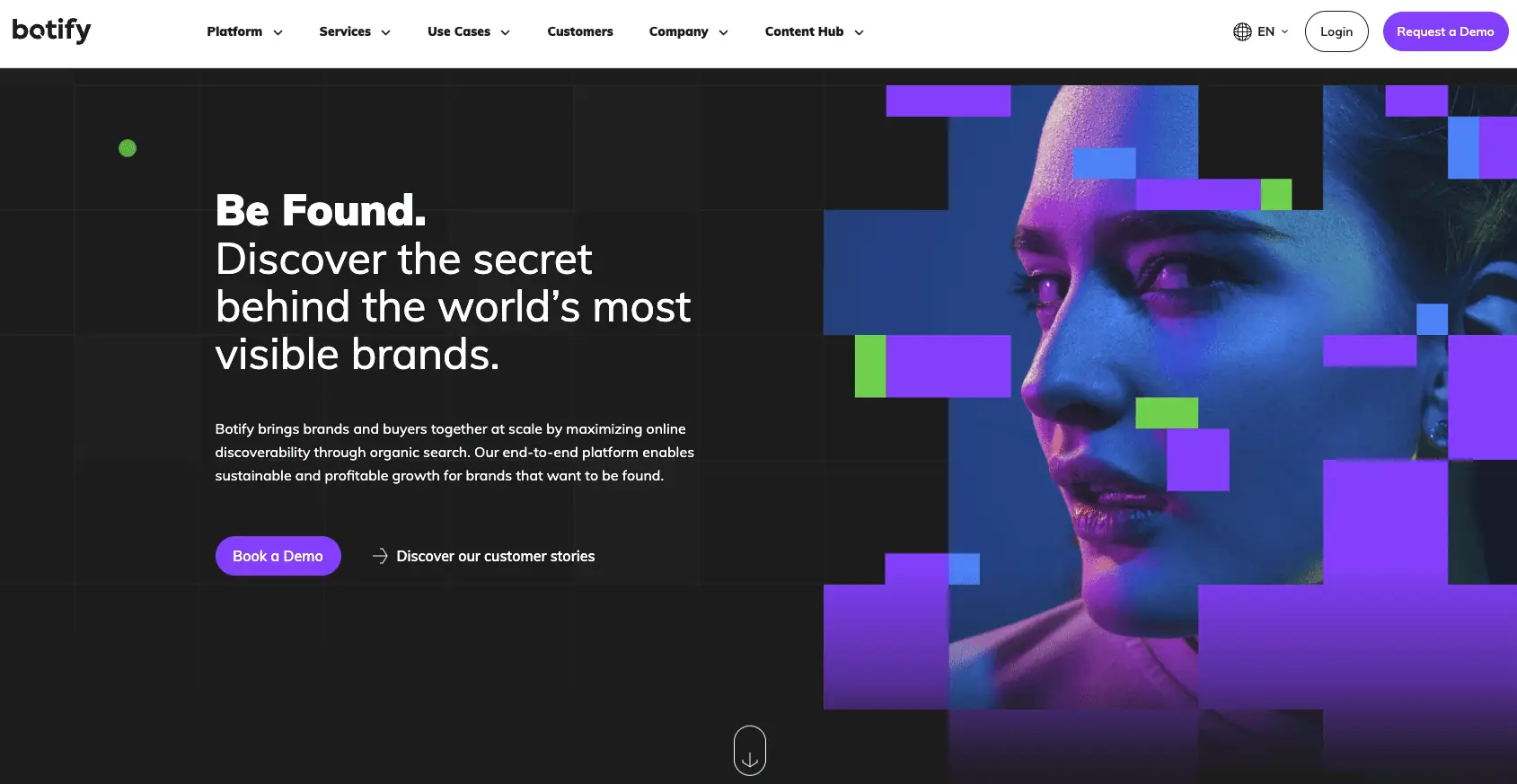
Botify is an enterprise solution designed for large businesses. The platform analyzes business websites using over 1000 metrics, recommends SEO optimizations, and automates the process of getting your content crawled and indexed by search engines.
In terms of dashboarding capabilities, Botify includes a tool called Botify Studio, which can turn any KPIs you choose into a dashboard in just one click.
Why Choose Botify?
- You have a large website: Botify is for big businesses that may be struggling to get large websites with thousands of pages effectively crawled, indexed, and ranked.
- You need help prioritizing: Botify shows you which SEO optimizations will have the biggest impact and allows you to track those KPIs in custom dashboards.
- You need technical SEO support: The Botify team are technical SEO experts.
Limitations
- Only suitable for large online businesses.
- Lack of price transparency.
Pricing
- Botify pricing is only available upon request.
Best For Managers & Team Leaders: Geckoboard
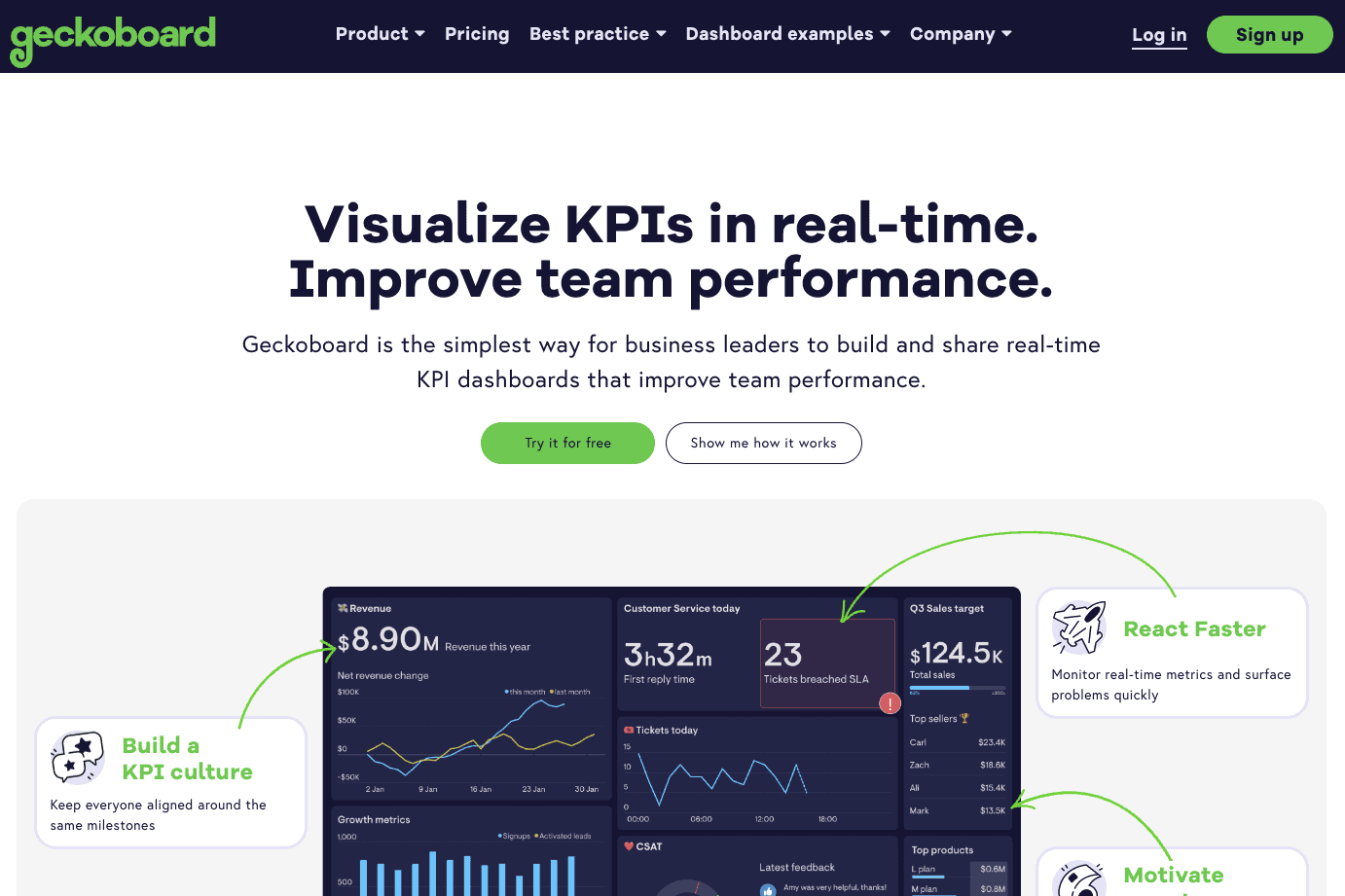
Geckoboard offers a comprehensive dashboard solution that integrates seamlessly with more than 90 different data sources, including spreadsheet tools like Google Sheets. The platform works in real time, so you can make live decisions and always have access to the latest data.
We’ve selected Geckoboard as the best SEO dashboard for managers and team leaders as the platform makes it incredibly easy to display targets and share data with team members.
Why Choose Geckoboard?
- Real-time data visualization: Geckoboard’s dashboards automatically update with the latest data, ensuring that users always have access to real-time information.
- Clearly display KPIs and targets: Geckoboard is perfect for keeping a team focused by displaying targets and KPIs on one clear dashboard.
- Easy sharing: Dashboards can be shared via a link, on a TV, on mobile or in snapshots sent via email or Slack.
Limitations
- Requires a reasonable degree of technical expertise to set up and configure.
- Not all data sources are available on the entry-level plan.
Pricing
- From $39 per month billed annually
- From $49 per month when you choose to pay monthly
- A 20% discount is available for non-profit organizations
Why Use an SEO Dashboard?
If you’re serious about SEO then you will find an SEO dashboard to be an invaluable tool for monitoring and analyzing your SEO efforts.
Reasons to use an SEO dashboard include:
- Save time and effort: Automatically collect and display important insights and data from various sources in a single centralized location.
- Get an overview: A dashboard provides a comprehensive overview of a website’s performance, including keyword rankings, organic traffic, and backlink growth. This enables you to make more informed decisions.
- Track your progress: Without a dashboard, you may find it difficult to see the effect of your SEO campaigns.
- Share targets and KPIs: If you work for clients or as part of a team then an SEO dashboard will make it easy to share your key metrics and progress towards your goals.
How to Choose the Best SEO Dashboard for You
We’ve revealed the 10 best SEO dashboards according to our experts, but how do you decide which one is right for you?
As well as looking at our overview of the best use cases for each SEO dashboard, we recommend considering the following factors:
- Consider your needs and goals: It’s important to identify what specific metrics and data you want to track. For example, if your main goal is to monitor keyword rankings and backlinks, you might prioritize a dashboard that provides comprehensive data in these areas.
- Evaluate the user interface and ease of use: A good SEO dashboard should have a user-friendly interface that allows you to easily navigate and understand the data. Look for features like customizable dashboards, intuitive graphs, and clear presentation of information.
- Take into account the integration capabilities: If you’re already using other tools or platforms in your marketing stack, it’s important to choose an SEO dashboard that integrates well with these existing tools.
- Consider the scalability and flexibility: As your business grows, your SEO needs may change. Choose a dashboard that can accommodate the growth of your business and adapt to your evolving requirements. This could include features like the ability to handle large amounts of data, customizable reporting, and the option to add or remove users.
- Look for advanced features and customization options: You may need advanced features such as competitor analysis, social media monitoring, or local SEO tracking. Make sure the dashboard you choose offers these features or the ability to customize it to your needs.
- Read reviews and seek recommendations: It’s always a good idea to read reviews and get recommendations from industry experts or colleagues who have used different SEO dashboards.
- Consider the cost and value for money: While cost shouldn’t be the sole factor in your decision-making process, it’s important to consider the overall value for money.
Final Thoughts: The Best SEO Dashboards in 2024
Choosing the best SEO dashboard for you might not be easy. With so many different options available, you’ll need to think carefully about your own needs, priorities, and budget to find the reporting tool that best fits your requirements.
Unfortunately, unlike many other online services, most SEO dashboard tools don’t offer free trials. You’ll therefore need to base your decision on guides like this one, user reviews, recommendations, and information available on the dashboard’s website.
To help you get started, we recommend checking out DashThis, which is our choice of Best SEO Dashboard in 2024. It connects with a huge range of data sources to produce clear and user-friendly dashboards, and a free trial is available so that you can try it for yourself.
If DashThis isn’t for you then consider what you want to use an SEO dashboard for. Are you a freelance SEO, a content marketer, a small business, or do you represent a large organization with a sprawling e-commerce site? We’ve chosen the best SEO dashboards for a variety of use cases to help you narrow your search.
However long it may take you to choose an SEO dashboard, we’re confident that it will be worth it. The right tool could truly revolutionize your SEO, saving you time and giving you valuable insights that will lead to better-performing campaigns and, ultimately, more traffic and revenue.